
The Great AI Reset: Why "Good Enough" is No Longer Profitable
The honeymoon is dead. In 2024, a CEO could pacify the board by saying, "We’re experimenting with LLMs." By 2026, that answer is a liability. We have entered the era of the Great AI Reset, where the novelty of generative chat has been replaced by a cold, hard look at the balance sheet.
For the modern C-suite, the frustration is palpable. You’ve likely spent millions on "AI-enabled" SaaS seats, yet your core operational costs haven't budged. According to a recent survey by BCG, while 89% of executives rank AI as a top priority, only 11% have seen significant impact. The gap between those two numbers is what we call the "Value Chasm." At Catalect, we know that crossing this chasm doesn't require more models; it requires Custom Integration designed to dismantle Enterprise Workflow Bottlenecks.
1. The CFO’s Hidden Enemy: The "Data Preparation Tax"
If you look at your technology spend, there is a ghost in the machine: the Data Preparation Tax.
Most organizations fall into the trap of buying "off-the-shelf" AI tools that require data to be moved, cleaned, and reformatted before they can even function. This is a massive ROI killer. Research from Anaconda’s State of Data Science confirms that data professionals still spend nearly 80% of their time on data prep.
The Pain Point: You aren't paying for intelligence; you’re paying for plumbing. When you "bolt on" a generic AI tool to a legacy system, you’re essentially hiring an expensive digital assistant who doesn't know where the files are kept.
The Decision-Maker’s Pivot: To achieve High-Yield Agentic Orchestration, you must move toward Zero-Copy Architecture. This is where Catalect excels. We don't ask you to move your data to the AI; we bring the AI to the data. By integrating intelligence directly into your existing Snowflake, ERP, or CRM environments, we eliminate the "cleaning phase" and move straight to the "value phase." This is how you reclaim 80% of your wasted AI budget.
2. Moving from "Time Saved" to "Process Elimination"
Most COOs are still being sold on "Productivity Gains": the idea that if an employee saves 10 minutes, the company is more profitable. This is a financial illusion.
In a complex enterprise, saved minutes are usually absorbed by the next bottleneck. Real ROI of AI in 2026 is not about making a broken process faster; it’s about eliminating the process entirely.
The shift to Agentic Workflows
Imagine your procurement cycle.
- The Hype-Phase approach: An AI helps an employee write an email to a vendor. The bottleneck (the human needing to trigger the email) remains.
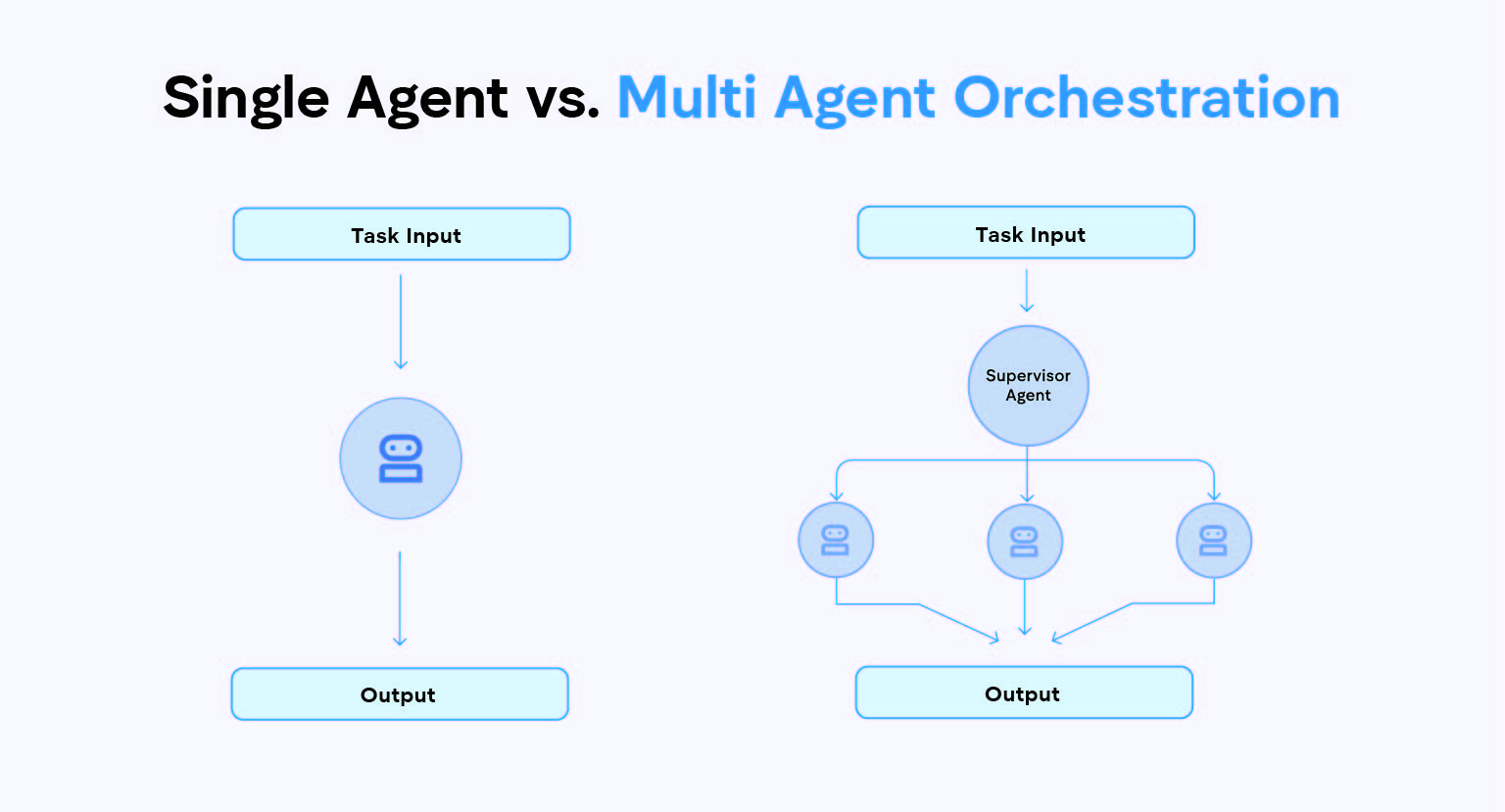
- The High-Yield approach: A Custom Integration layer monitors your inventory levels, identifies a shortage, cross-references three vendor contracts for the best price, and executes the purchase order autonomously.
This is Agentic ROI. You haven't just saved a few minutes of an employee's time; you’ve removed a manual "check-and-balance" hurdle that used to take three days. You are no longer paying for "motion"; you are paying for Momentum.
3. Strategic Capital Allocation: Owning the Brain vs. Renting the Tool
One of the most pressing challenges for a CFO in 2026 is SaaS Bloat. Every vendor in your stack has likely added an "AI surcharge" of $30 to $60 per user.
If you have 1,000 employees, you could be spending $500,000 a year on fragmented AI features that don’t talk to each other. This is Siloed Intelligence, and it is a strategic dead end.
At Catalect, instead of renting 20 different AI "features," we help you build a Custom Integrated AI Layer.
- Consolidated costs: You replace fragmented AI subscriptions with a single intelligence layer that centralises decision-making and scales across teams.
- Proprietary IP: Most AI spend delivers short-term capability without long-term ownership. Custom integration changes that. When intelligence is embedded into your systems, it becomes a durable corporate asset that compounds value over time.
- Hyper-personalisation at scale: By grounding intelligence in your own operational data, you unlock customer journeys shaped by real behaviour and context, creating experiences competitors struggle to imitate.
4. The Hard ROI Scorecard: Metrics That Drive Real Growth
C-level leaders don't need "sentiment scores." They need auditable numbers. When we work with clients, we focus on three Hard Metrics:
- Unit Cost Compression: Can we reduce the cost of a single transaction (an insurance claim, a legal review, a customer support ticket) by 40%? If the answer is no, the integration isn't deep enough.
- Revenue Velocity: How much faster can we move a lead to a closed deal? Using AI to eliminate workflow bottlenecks in the sales cycle is the fastest way to see Top-Line Growth.
- Growth Leverage: Growth isn’t measured by adding managerial layers. It comes from adopting Agentic Workflows that let you scale output without increasing headcount proportionally. This is the most effective way to protect margins in a high-inflation environment.
5. Overcoming the "3 Big Mistakes" of AI Implementation
Consulting experience repeatedly shows that structural weaknesses are the main source of failure.
- The Bolt-On Fallacy: You cannot fix a messy process with a shiny tool. If your data is a mess, AI will just help you make mistakes at the speed of light.
- The "Shiny Object" Syndrome: Don't start with the AI. Start with the Bottleneck. What is the one thing that, if it moved 10x faster, would double your profit? Start there.
- Disconnected Governance: Trying to add "security" after the AI is already running. We build Governance-by-Design, ensuring that every Agentic Workflow is auditable, compliant, and secure from day one.
Conclusion: Why Your 2026 Solution Starts with Catalect
The difference between a "Budget Black Hole" and a "Value Center" is the architecture you choose today.
At Catalect, we don't just "implement AI." We are Architects of Autonomy. We help CFOs find the hidden profit in their data and COOs build the systems that make their competitors look like they are moving in slow motion.
The market in 2026 will be divided into two camps: those who bought a lot of AI tools, and those who built a Custom Integrated Strategy.