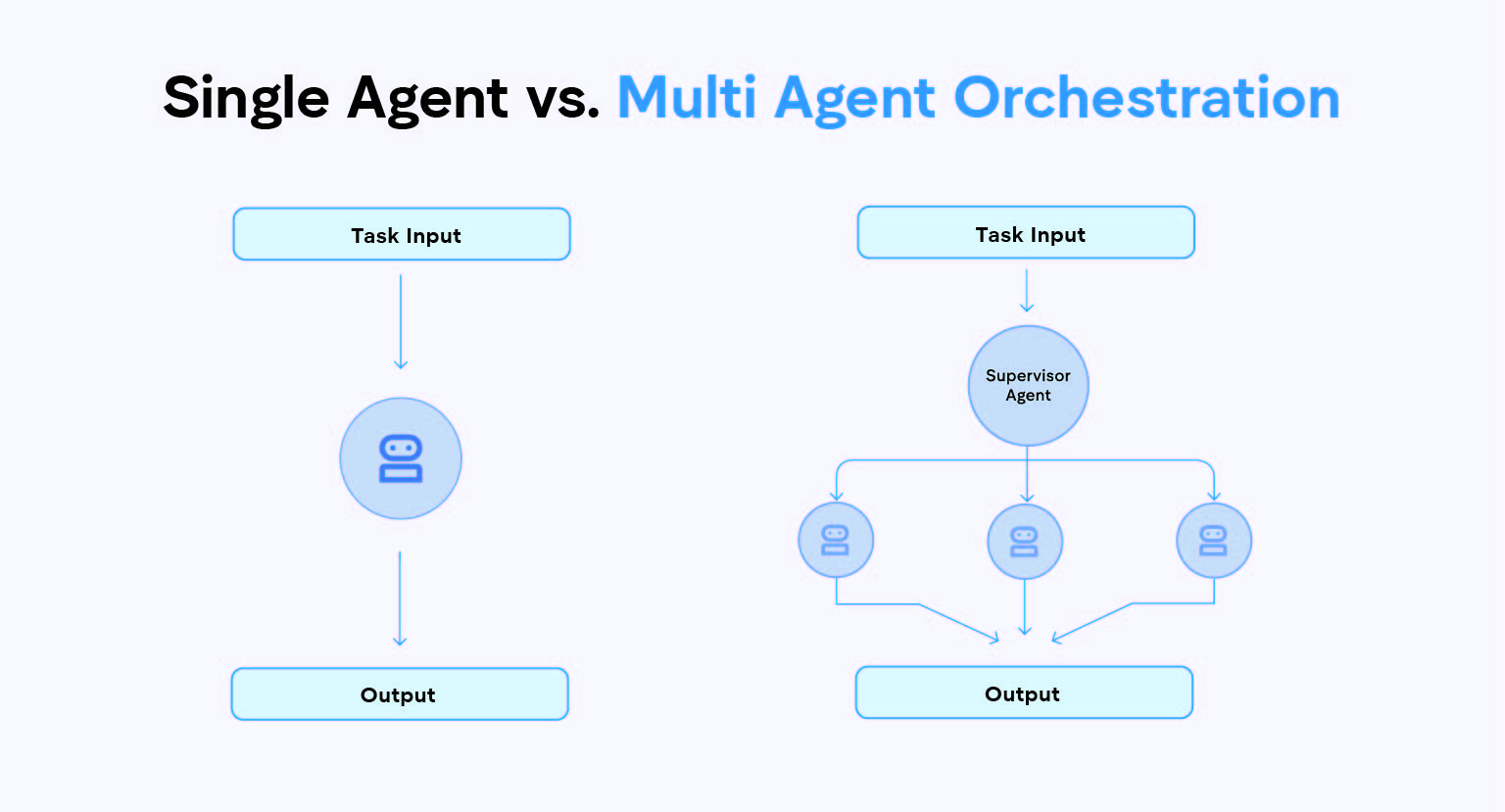

Enterprise AI investment is accelerating, but production adoption remains a challenge for many organizations.
Global enterprises are currently investing millions in AI pilots, predictive maintenance for factory floors, GenAI customer service agents, and sales forecasting models. The early results look promising. Accuracy rates hit the mark; pilot users are impressed, and the board gives the green light.
But six months later, the momentum vanished. These initiatives haven’t delivered measurable ROI; they aren’t embedded into core systems, and in many cases, they’ve been quietly shelved altogether. This isn’t a isolated misstep research shows, a majority of enterprise AI initiatives fail to transition to production, in some studies, as many as 70 – 90% pilot projects never make the leap. (Agility at Scale)
The problem isn’t the technology, it's structural. Pilots are engineered for controlled success, but scaling AI in enterprises demands enterprise-wide readiness, hard-coded integration, and a relentless alignment with business value. To move from a "test case" to a permanent production-ready AI asset, you need a framework that treats scaling as a strategic transformation.
Before scaling, you must identify if your foundation is the problem. Read our 2026 Enterprise Infrastructure Checklist to see if your legacy stack can support AI deployment at scale
The Pilot Trap: Why Early Success Isn’t Enough
AI pilots are designed to prove feasibility in a controlled setting. They often rely on curated data and restricted use cases that don’t reflect the friction of a live enterprise environment.
What Makes Pilots Misleadingly Successful?
- The Clean Data Illusion: Pilots often run on datasets that have been pre‑cleaned and filtered. Real-world enterprise data is a mess of legacy silos and inconsistent schemas.
- Fragile Scalability: A model that excels on one factory line doesn’t automatically transfer to the next with diverse equipment. Moving beyond a specific sandbox requires a robust architecture built for AI deployment in real-world complexity.
- Manual Workarounds: During the pilot phase, teams may use manual patches to bridge gaps and show progress. In a production environment, these must be automated to be sustainable.
This leads to what industry analysts call the pilot‑production paradox: AI models can perform excellently in sandbox environments but fail under real‑world complexity. According to one review, 73% of successful AI pilots never deploy to production. (Pertama Partners)
The Transition Gap: Identifying the Bottlenecks
Identifying the core scaling barriers isn't about looking backward at what went wrong; it’s about mapping the territory between a successful experiment and a permanent enterprise AI initiative.

1. Inadequate Data Readiness and Integration
One of the most cited obstacles in scaling AI in enterprises is data readiness. In pilot environments, data is often pre‑processed and well‑structured. But in production:
- Data sources are fragmented across CRM, ERP, legacy systems, and external platforms.
- Quality varies widely, with missing fields, duplicates, and inconsistent schemas.
- Data governance is often weak or nonexistent.
According to KPMG, fragmented data and poor governance limit scalability and contribute to inaccurate AI outputs. (KPMG)
2.The ROI Disconnect
AI pilots can demonstrate neat metrics, improved accuracy, reduced error rates, or faster predictions. But for an initiative to be sustainable, it must deliver measurable business value.
Businesses that fail to define KPIs tied to strategic goals, such as cost reduction, revenue uplift, or workflow productivity, struggle to justify scaling efforts. Without this alignment, a model that “works well” remains an academic exercise rather than a transformative solution that impacts the bottom line.
Scaling enterprise AI initiatives without clearly defined ROI is a common failure point. In our analysis of AI ROI in 2026, we break down how workflow bottlenecks, not algorithms, determine financial return.
3. AI Governance as a License to Operate
AI doesn’t scale in enterprises without governance frameworks that cover:
- Ethical use and bias mitigation
- Data privacy and security
- Explainability and auditability
These aren’t always primary concerns in pilots, but they become critical guardrails that prevent regulatory friction from killing a project.
4. The Innovation Silo
Enterprise AI projects often start within innovation labs or data science teams, disconnected from core business units and IT operations. When production is the next frontier, these organizational silos create barriers:
- Misaligned priorities between departments.
- Lack of shared ownership of the final product.
- Resistance to process changes from end users.
For AI deployment to succeed, cross-functional collaboration between business leaders, IT operations, data engineers, and end users is essential. (Agility at Scale)
5. Infrastructure Constraints
Legacy systems and fragmented architectures are another common scaling blocker. Pilots may run in isolated environments, but production AI systems must integrate with existing enterprise architecture:
- Real‑time data streams
- High‑throughput compute environments
- APIs and secure service layers
- Monitoring and lifecycle management
Without scalable infrastructure, AI deployment in enterprises can fail to meet the performance and reliability expectations required for day-to-day operations.
The 4 Pillars of Scaling Enterprise AI
To bridge the gap between pilots and production, enterprises must adopt a strategic, structured approach that treats scaling AI in enterprises as an organizational transformation rather than a technical artifact.

Pillar 1: Data‑Ready
AI scaling is fundamentally a data problem. To move beyond the pilot, organizations must treat data readiness as a core piece of strategic infrastructure:
- Establish data governance policies
- Build unified data platforms and pipelines
- Standardize taxonomy and schema definitions
- Implement real‑time validation and observability
Pillar 2: Purpose‑Built
AI initiatives must be aligned with specific business objectives from the very start to ensure they aren't just technical successes, but commercial ones:
- Define key performance indicators (KPIs) tied to business outcomes
- Track ROI metrics like cost savings, productivity gains, and revenue contribution
- Prioritize use cases that deliver measurable value early to build momentum.
Pillar 3: Collaborative
Scaling AI isn’t a data science problem, it’s a cross‑functional enterprise transformation:
- Break down silos between data, IT, and business units
- Establish shared ownership and accountability
- Align incentives and performance metrics
Pillar 4: Led with Conviction
Moving from proof of concept to production-ready AI requires strategic leadership and executive sponsorship to navigate the complexities of scaling:
- Set enterprise priorities for AI adoption
- Allocate budget and resources for scaling
- Build AI governance frameworks and risk controls
- Drive organizational change and adoption
Practical Steps to Move Beyond the Pilot
Transitioning from a proof-of-concept AI pilot to a production-ready AI system requires tactical shifts in how projects are managed:
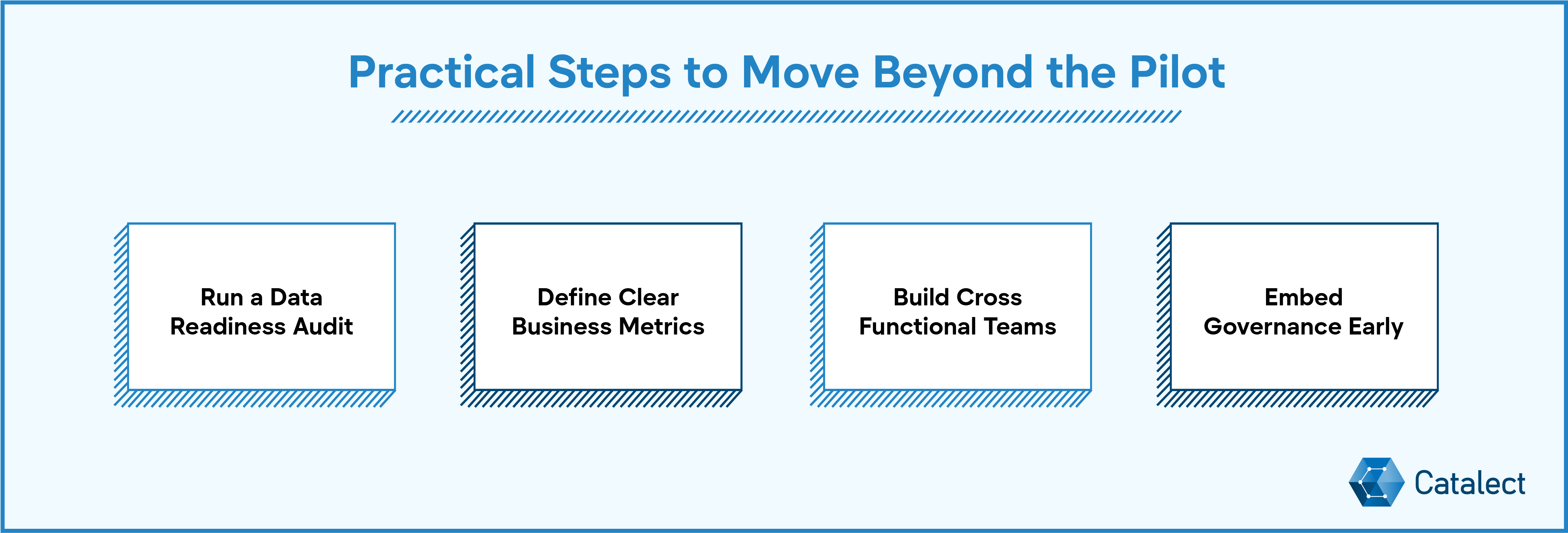
1. Run a Data Readiness Audit
Most pilots operate in controlled conditions. Production does not.
Before AI deployment, leadership teams need a clear view of the gap between the pilot environment and the live ecosystem. That means assessing data quality, integration readiness, system dependencies, and ownership structures.
In our experience, this is where many AI initiatives stall, not because the model underperforms, but because the surrounding architecture isn’t ready to support it.
A true data readiness review should answer one question:
Can this model survive in the real environment it’s about to enter?
2. Define Clear Business Metrics
Technical accuracy is not the same as enterprise value. To justify scaling AI in enterprises, organizations must define measurable business outcomes upfront. What operational bottleneck is being removed? What cost center is being reduced? What revenue channel is being optimized?
When AI initiatives are tied directly to cost reduction, productivity gains, or revenue expansion, scaling becomes a strategic decision, not an experimental one.
Without this alignment, even high-performing models struggle to survive budget cycles.
3. Build Cross‑Functional Teams
AI deployment in enterprises requires coordinated execution, not isolated experimentation. Ownership must expand beyond the data science team. IT leaders, operations teams, compliance stakeholders, and business unit heads all need shared accountability.
The transition from pilot to production is often less about model performance and more about organizational alignment. When ownership is unclear, deployment slows. When incentives are misaligned, adoption suffers.
Scaling AI in the enterprise requires coordinated execution, not isolated experimentation.
4. Embed Governance Early
Governance cannot be retrofitted after deployment.
As production-ready AI systems become embedded in core workflows, enterprises must address explainability, data privacy, bias mitigation, and auditability at scale. These are not theoretical concerns, they are operational requirements.
Organizations that embed AI governance frameworks early move faster later. Those that postpone often find AI deployment blocked by regulatory or compliance friction.
Conclusion
Enterprise AI doesn’t fail because of models, it fails because of execution and integration. Pilots prove potential, but only integrated, production-ready AI systems deliver sustained ROI.
By focusing on data readiness, business alignment, cross-functional collaboration, and leadership commitment, enterprises can move AI from isolated experiments to embedded operational assets.
At Catalect, we help organizations bridge that integration gap modernizing infrastructure and embedding AI for enterprise directly into workflows so scaling AI in enterprises becomes sustainable.
If your enterprise AI initiatives are stalling after the pilot phase, it may be time to rethink the foundation. Contact Catalect today to start the conversation and unlock full AI potential.